The Sirohi is a strong, medium-large goat breed that originally comes from Palampur in Gujarat and the Sirohi district of Rajasthan, and is widely kept across Rajasthan, Uttar Pradesh, and Gujarat.

Breed– Sirohi
Characteristics– Its coat is a dark brown with tan patches, and it’s easy to spot by its flat, drooping ears, gently curved horns, and short, coarse hair.
Males grow quickly, reaching about 80 cm in length and up to 70 kg within a year, while females average 62 cm and around 40 kg.
It breeds twice a year and produce about 0.5 kg of milk a day roughly 65 kg per lactation with around 60 percent of births resulting in twins, making this breed reliable for both milk and meat and great for growing a herd.
Proper infrastructure and fodder not only supports the growth and reproduction but also helps prevent diseases. Here is some basic infrastructure that farmers need when starting a goat farming business-
Basic needs-
A closed shed is the backbone of a goat farm. It should be well-ventilated, insulated, and dry, with sandy soil to absorb moisture and prevent hoof diseases.
- Separate areas for adult goats, kids, and pregnant females help manage feeding, health, and breeding efficiently.
- Proper ventilation ensures fresh air circulation, reducing respiratory problems.
- Roofing should protect animals from extreme heat and heavy rains.
- Flooring should be sloped slightly for drainage and easier cleaning.
Sturdy feeding troughs make feeding organized and hygienic.
- Use durable, easy-to-clean materials like concrete or stainless steel.
- Provide enough space so all goats can feed comfortably at the same time.
- Place troughs off the ground to prevent contamination from manure or dirt.
- Separate feeding for kids and adults ensures proper nutrition.
Fresh water is essential for goat health and milk production.
- Install an adequate number of drinking troughs to prevent overcrowding.
- Use clean, non-toxic containers and change water at least once daily.
Good to have-
Shade Areas
Goats need areas to rest and escape the sun, especially in hot climates.
- Provide covered areas within the shed or in the grazing field.
- Ensure enough space for all goats to rest without crowding.
Management and care-
1. Keep it Clean
Think of waste management as the foundation of a healthy farm. If goat poop and urine pile up, they create a strong smell called ammonia, which can make your goats sick or hurt their hooves. To prevent this, you should clean the sheds every single day. Instead of just throwing the manure away, put it into a compost pit. Over time, it turns into amazing organic fertilizer that you can use for your crops or even sell for extra cash. A clean farm means happy goats and a better environment for everyone.
2. Organize the Space
It’s much smarter to divide your farm into smaller sections using internal fencing. This way, you can keep the kids, the adults and the pregnant females in their own comfortable areas. It also helps your grass grow back better because you can control where they graze. Most importantly, if a goat gets sick or you bring a new one home, you have a separate “quarantine” space to keep them away from the rest of the herd until you’re sure they are healthy.
3. Vet Care
Stay on track with vaccinations and deworming medicine, which protects the goats from common infections and parasites. Keep a close eye on your herd every day. If a goat looks tired or stops eating, act fast. Prevention is always cheaper than trying to cure a sick animal.
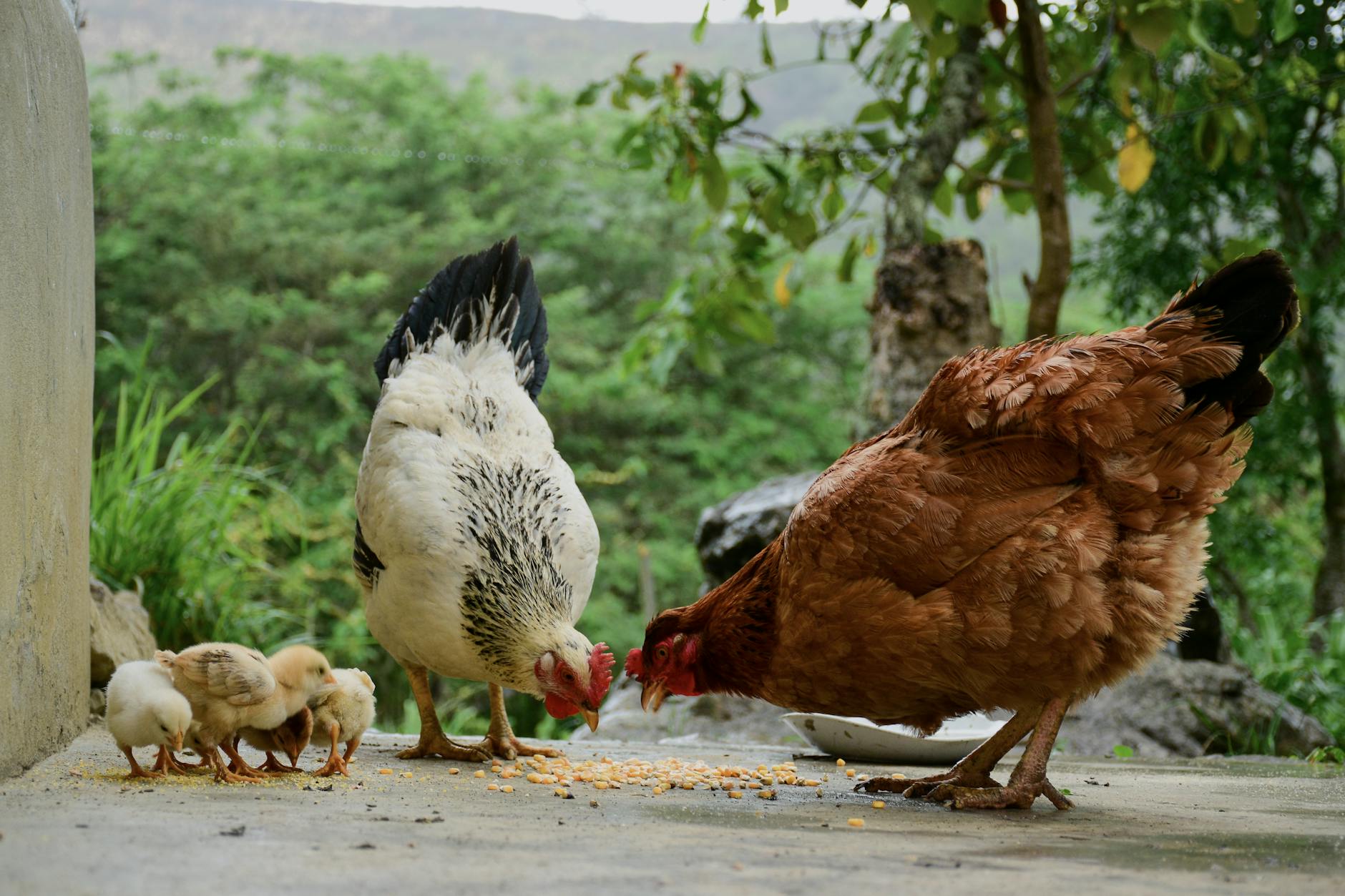
Desi Chicken (local) 25-30 are kept with goats for pest control
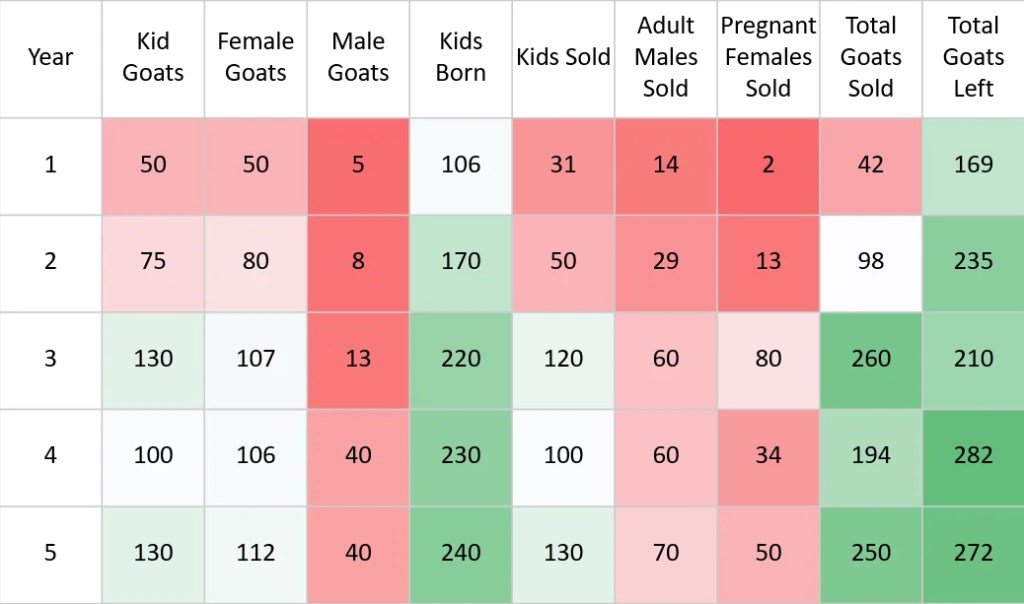
Rearing Sirohi Goat- 5 years cycle (approx.)
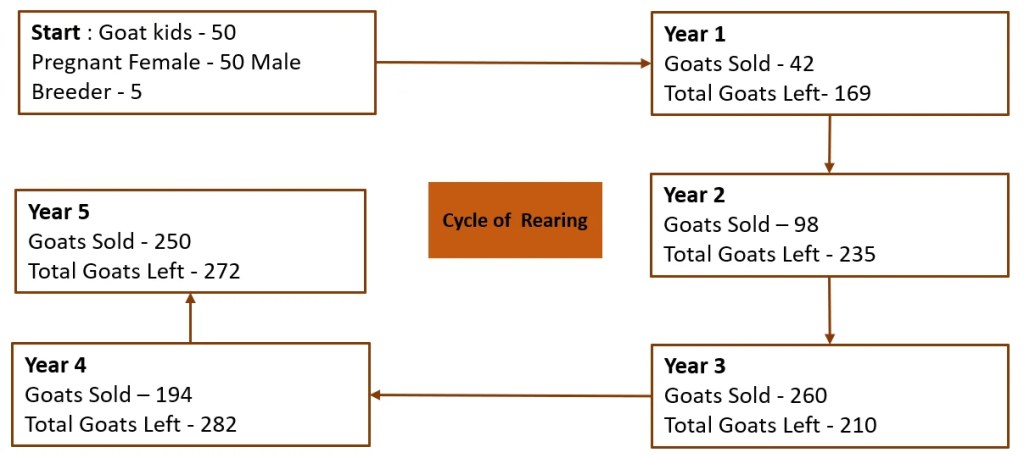
Number and type of Goats born and sold in 5 years (estimate)